
Structural FEA
Stress, displacement, stiffness and load-path evaluation for components, frames, platforms and equipment.
CAE · FEA · CFD · Validation
Structural, thermal, fluid-flow and dynamic analysis for industrial equipment, plant structures and machinery—built around defined load cases, verifiable assumptions and actionable design changes.
Discuss this scope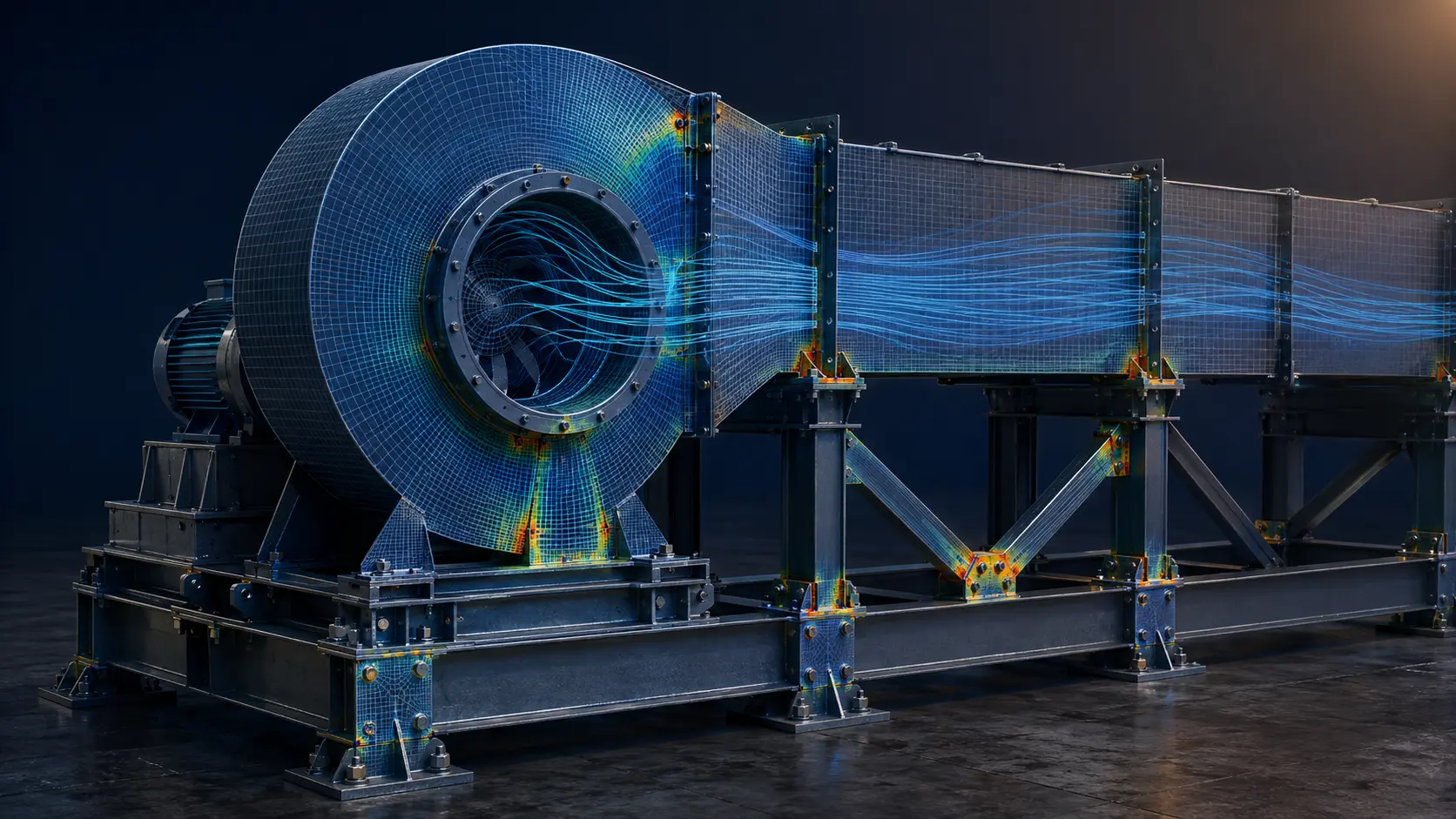
The engineering requirement
CAE is only useful when the model represents the physical question closely enough to support a decision. Loads, restraints, contacts, material data, mesh strategy and acceptance criteria must be defensible. Otherwise, even a numerically converged result can be misleading.
KURUKONDAR structures simulation around the decision at risk: strength, stiffness, fatigue exposure, vibration, thermal expansion, flow distribution, pressure drop or transient response. We document assumptions, check model behaviour, compare results with available evidence and translate findings into practical design recommendations.
Scope of work
Defined engineering outputs with the level of detail matched to concept, tender, fabrication or site execution.
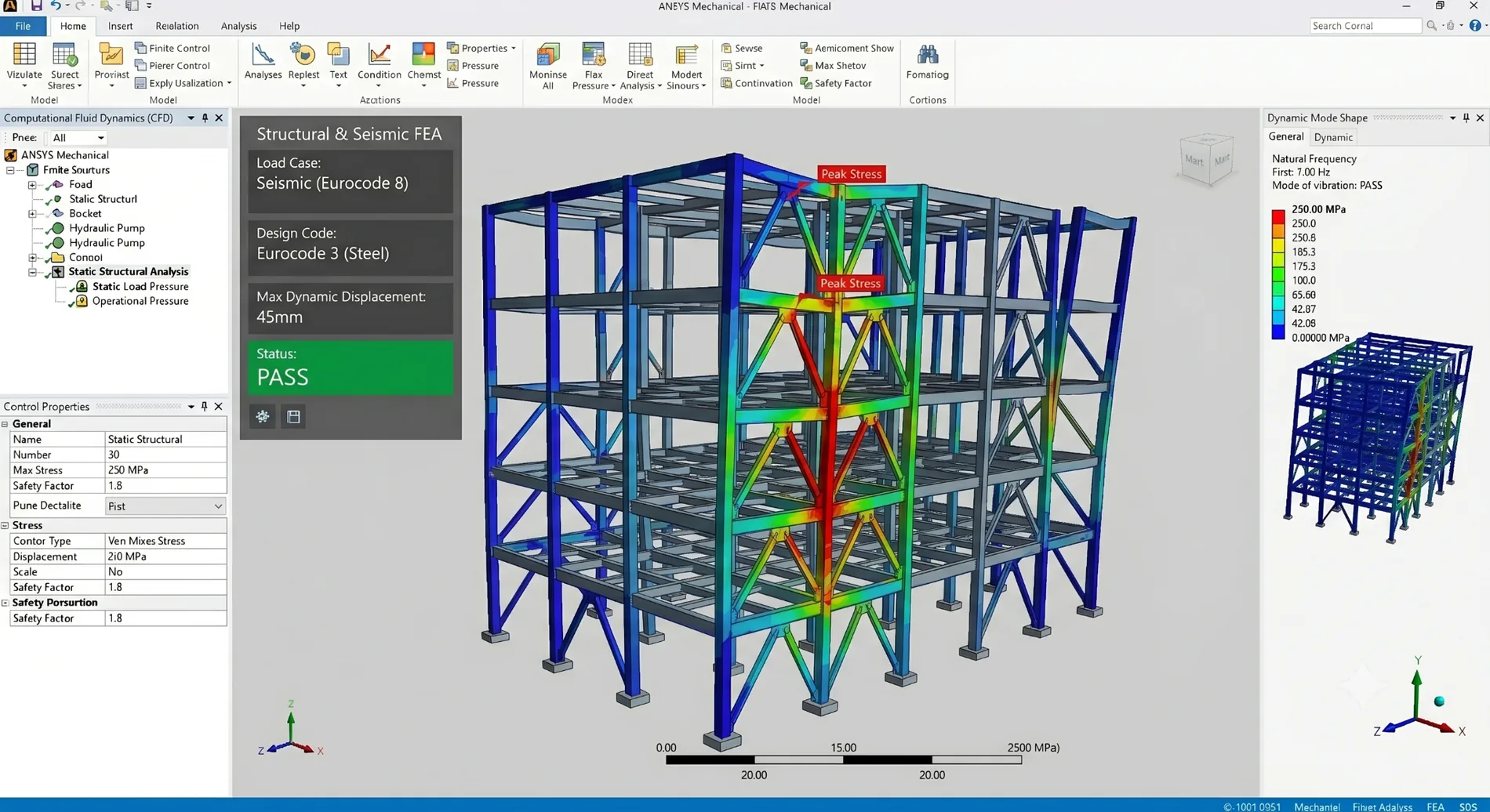
Stress, displacement, stiffness and load-path evaluation for components, frames, platforms and equipment.
Natural frequencies, mode shapes and separation from excitation sources for machinery and structures.
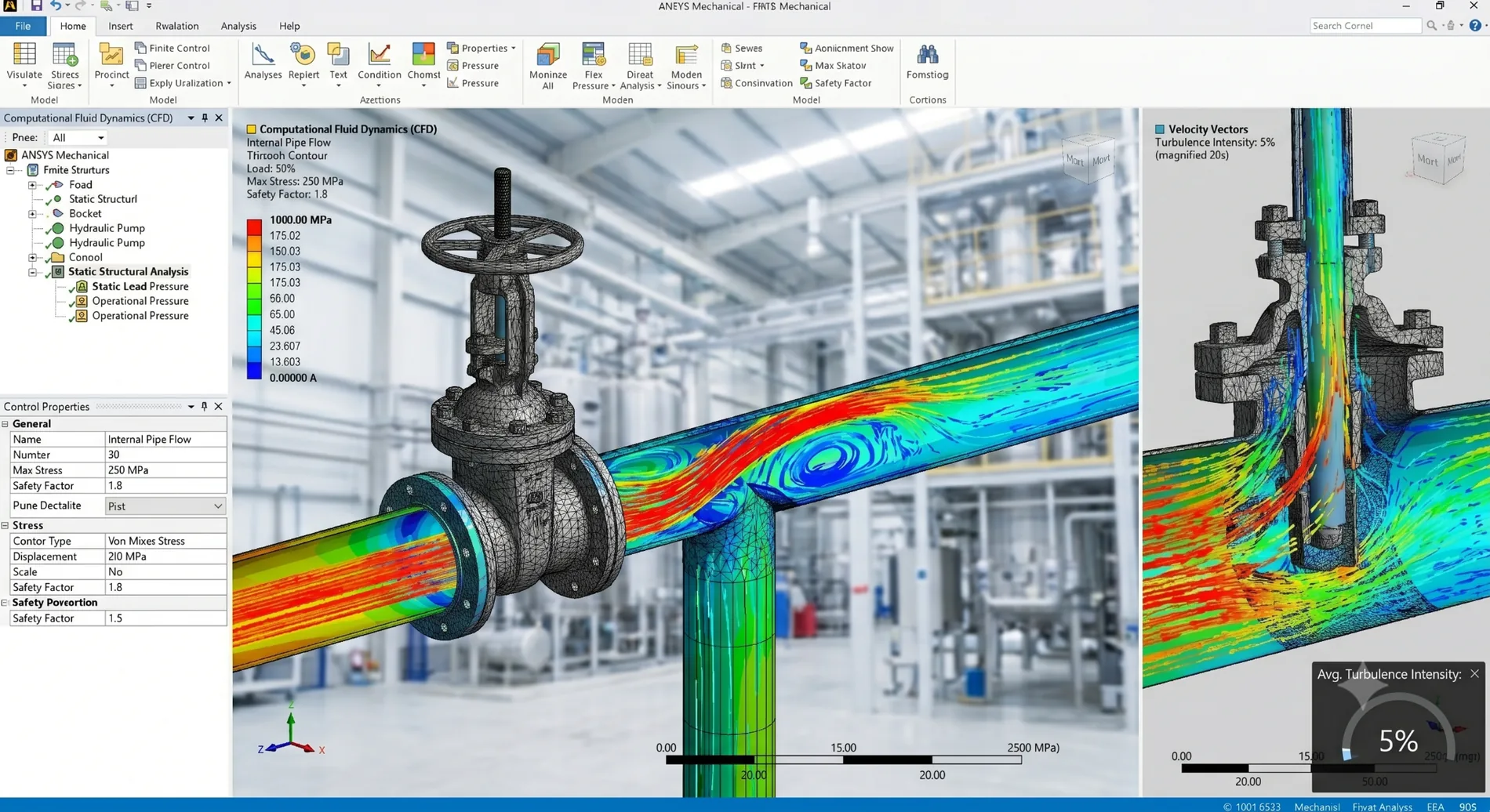
Internal and external flow, pressure drop, distribution, mixing and process-performance assessment.
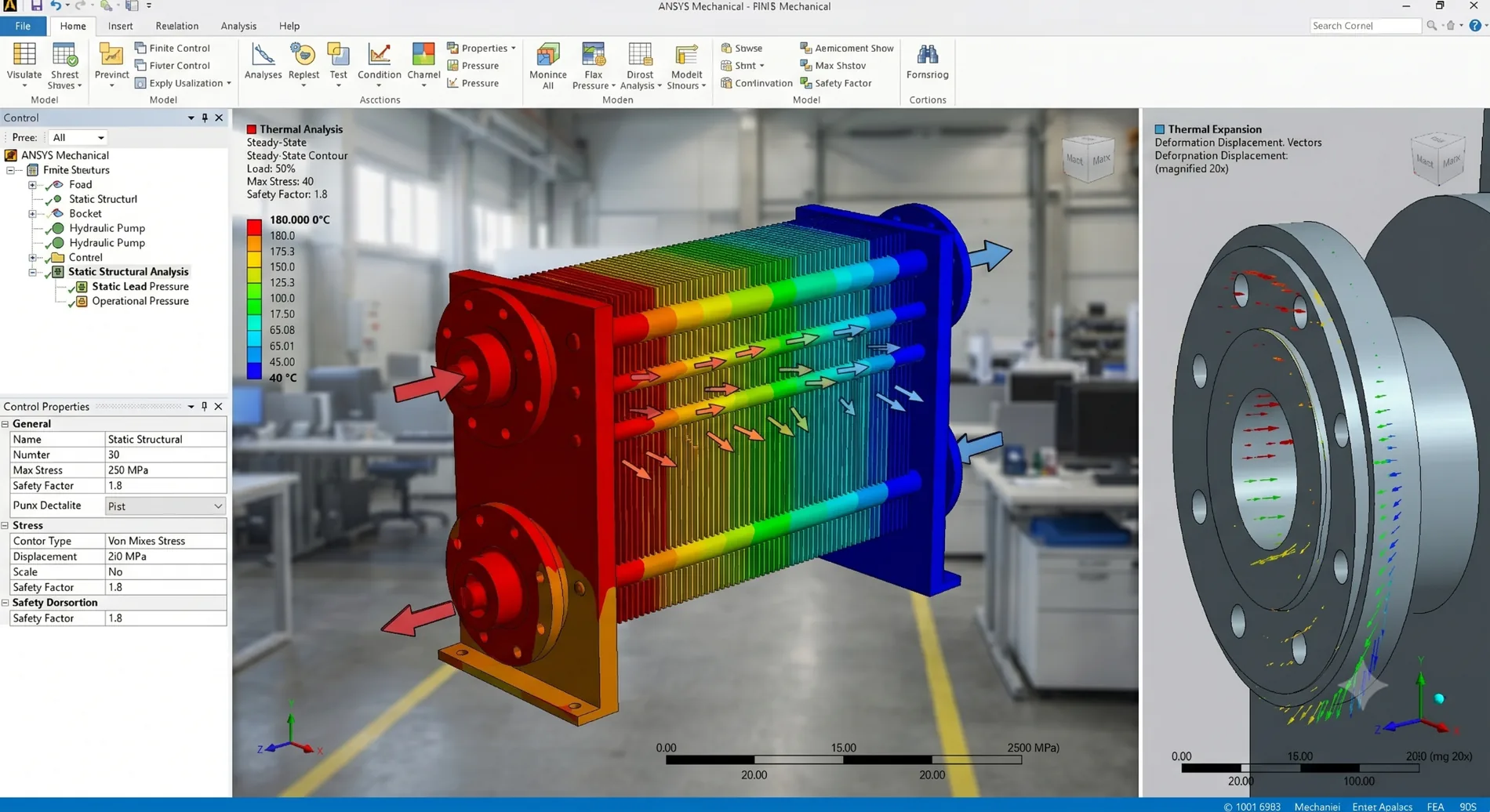
Steady and transient temperature fields, heat transfer, thermal gradients and expansion effects.
Time-dependent response to impact, changing loads, acceleration and operating events.
Targeted geometry, material and support changes evaluated against defined engineering objectives.
Engineering in context
Purpose-specific visuals connect the digital model and analysis to the equipment, interfaces and site conditions they must represent.
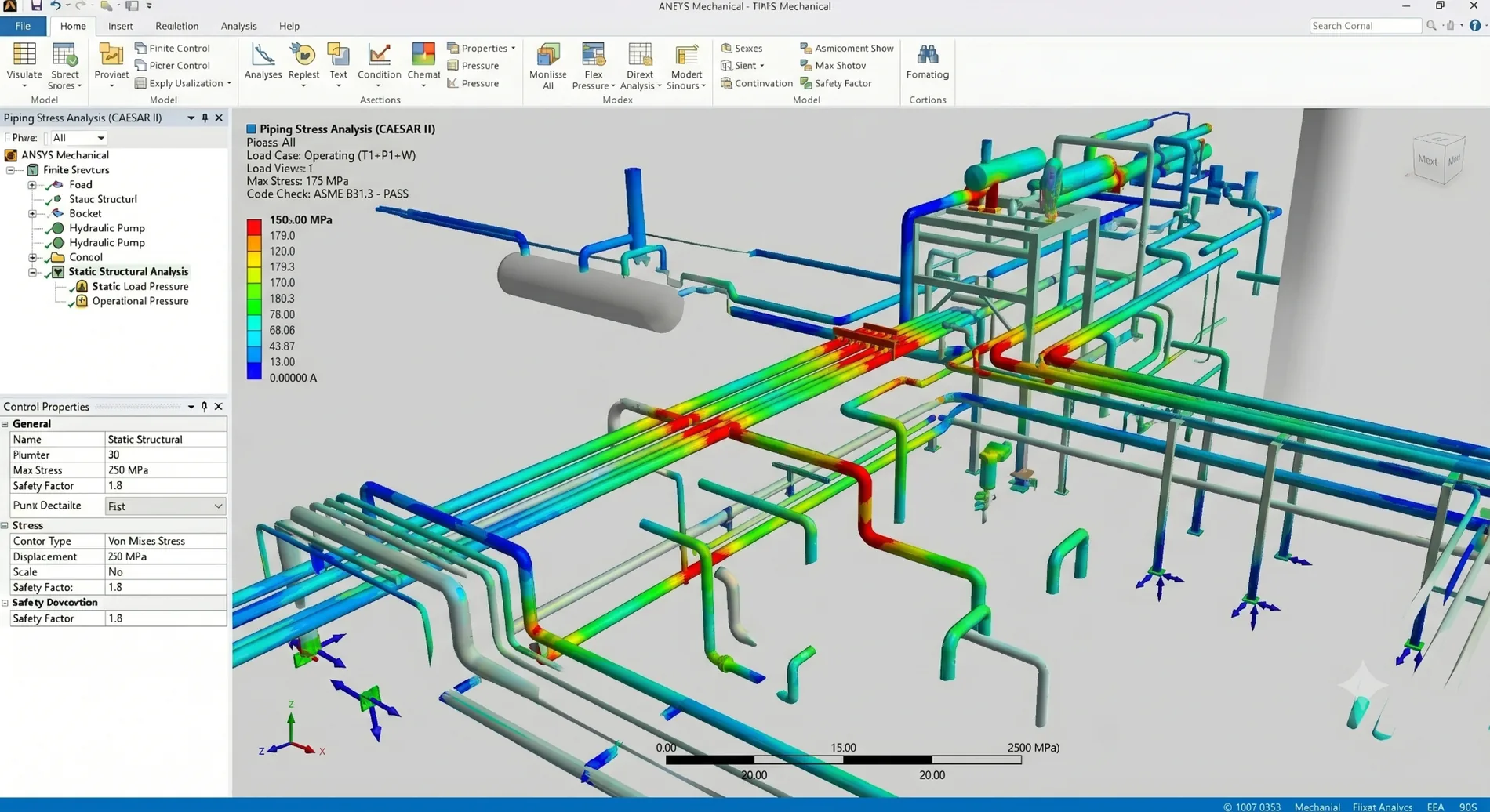
Engineering output
Models and reports are structured for coordination, review and controlled handover—not isolated analysis.
Working method
Each stage closes a specific risk before the project moves forward.
Define the decision, failure mode, load cases, evidence and acceptance criteria.
Create an appropriately simplified representation with traceable assumptions.
Review reactions, balances, sensitivity and whether the result behaves physically.
Translate the result into design action, validation needs and remaining uncertainty.
Applications
Frequently asked questions
The referenced KURUKONDAR toolchain includes ANSYS, Abaqus, Nastran, HyperMesh and Simcenter. Tool selection depends on the physics, client environment and required handover.
Typically geometry, materials, interfaces, operating conditions, load cases and acceptance criteria. If information is missing, we identify it and agree justified assumptions rather than hiding uncertainty.
We provide engineering analysis and reports within the agreed scope. Formal certification, notified-body approval or code sign-off must be explicitly defined and performed by an appropriately authorized party where required.
Yes. We can review model purpose, assumptions, loads, restraints, contacts, mesh, result interpretation and whether the conclusions are supported by the evidence.
Project review
Send the available inputs. We will identify what can be delivered, what is still missing and the practical next step.
[email protected] ↗Schaltstation 1